








Amplified by AI, the exposure grows exponentially.
"Teleskope is a data security platform that gives its customers the ability to scale, understand where their most sensitive data is, and manage data-related risks in the most efficient and effective way possible."

Payment processors secure the transaction. They don't tell you where the cardholder data ended up after it landed in a spreadsheet, a support ticket, or a shared drive. Teleskope classifies and governs that data wherever it lives, not just at the point of payment.
One of the world's largest brand of hotels and casinos runs Teleskope across 316 properties in 76 countries, spanning cafes, hotels, casinos, retail, and live venues. The platform was built for exactly this kind of decentralized, high-location-count environment.
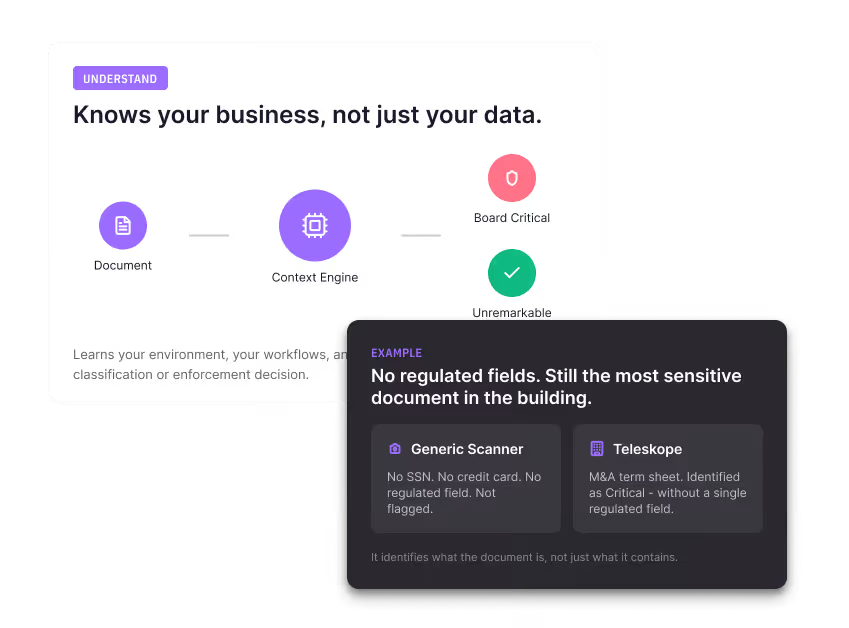
This is one of the more sophisticated risks in data security, and most classifiers don't address it. Teleskope's Reasoning Layer tracks data relationships across sources and flags when individually unremarkable fields combine into real exposure, a name, a room number, and a spending pattern becoming a complete guest profile.
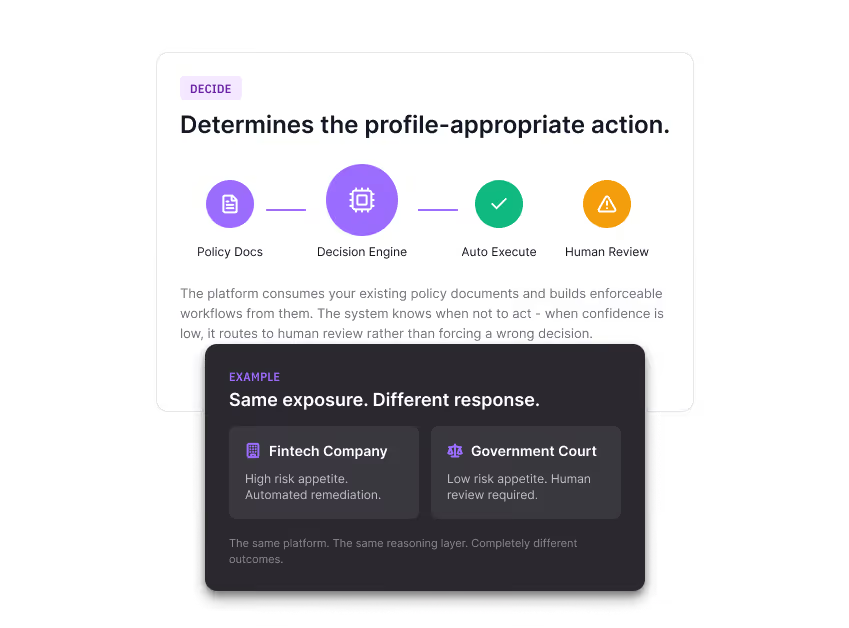
Teleskope tracks actual data usage, not just access configuration, and removes stale access automatically based on evidence, someone who hasn't touched a system in 90 days is treated differently from one who uses it daily. That matters most where turnover is high and access reviews haven't kept pace.
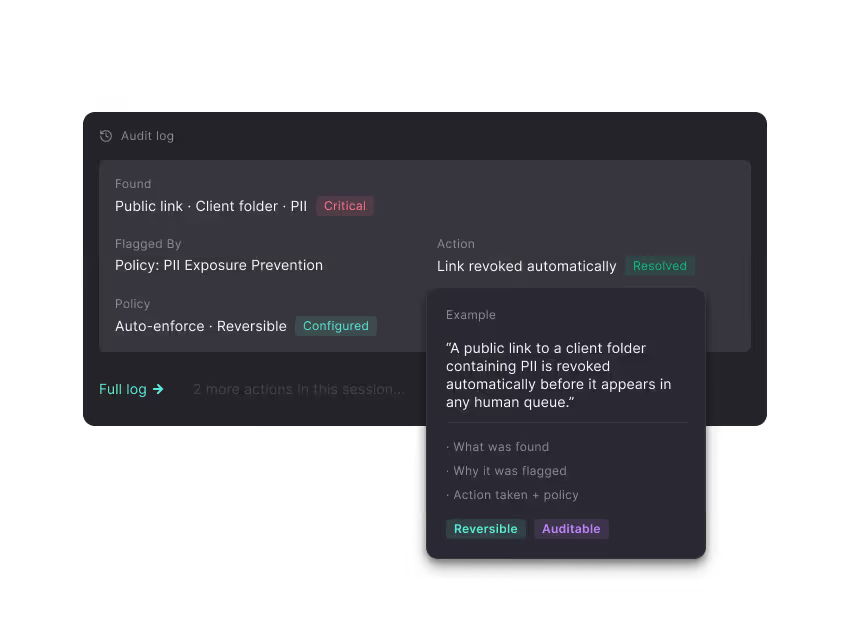
Every action is reversible and logged. If access is revoked or a file is quarantined incorrectly, it can be restored immediately, with an audit trail showing exactly what happened, why, and under which policy.