
















"There's so much more that this product does — when it adds in the remediation piece, that's critical to me not having to employ additional FTEs."

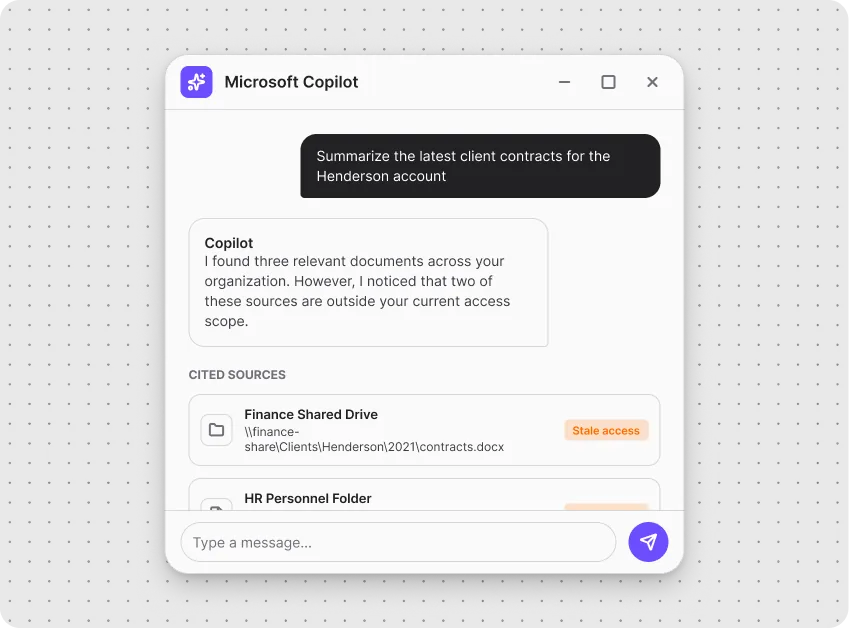
No — and this is one of the most common situations Teleskope addresses. Retroactive data governance for Copilot deployments involves three steps: mapping what Copilot currently has access to, identifying the sensitive data within that scope, and remediating over-permission and over-exposure. Teleskope does all three — and does it continuously, so as your data changes your Copilot governance stays current.
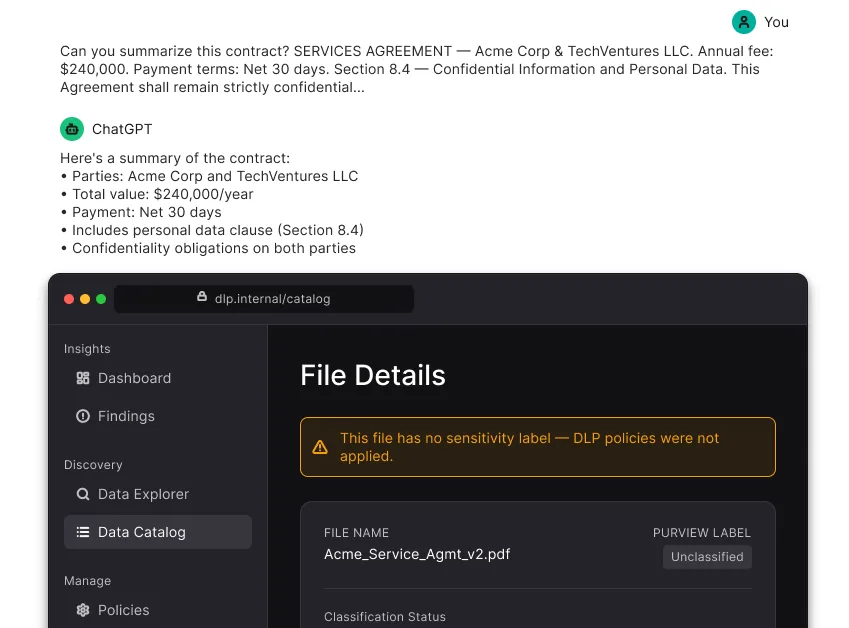
Purview's Copilot governance depends on MIP labels being accurate and complete — if your data isn't labeled correctly, Purview can't govern it correctly. Teleskope solves the upstream problem: it classifies your data accurately, applies the correct MIP labels, and Purview enforces based on those labels. Teleskope customers consistently reduce Purview's false positive rate and turn an 18-month Purview deployment into a 6-month one.
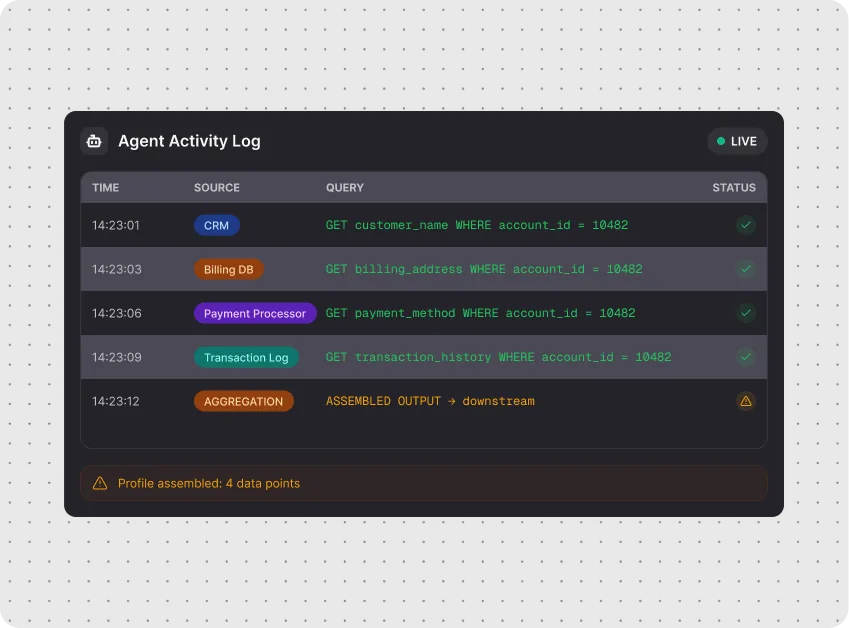
This is the most sophisticated and most underaddressed AI security risk in the market. Teleskope's Reasoning Layer is specifically designed to understand aggregation risk — it tracks data relationships across sources and identifies when AI queries or agent behavior is combining data in ways that create exposure through aggregation, even when individual data points are not sensitive. This capability is unique to Teleskope's contextual intelligence architecture.
The EU AI Act requires that automated AI decisions be auditable, explainable, and subject to human oversight. Teleskope's data governance layer supports these requirements by maintaining complete data lineage for AI systems — documenting what data was used, how it was classified, what access was granted, and what actions were taken — providing the audit trail regulators require.
Yes. Teleskope classifies sensitive content in code repositories — credentials, API keys, proprietary algorithms, and customer data embedded in codebases — and governs AI coding assistant access to that content. This is increasingly relevant as AI coding tools become standard in engineering workflows and the risk of credential and IP exposure through code completion tools grows.
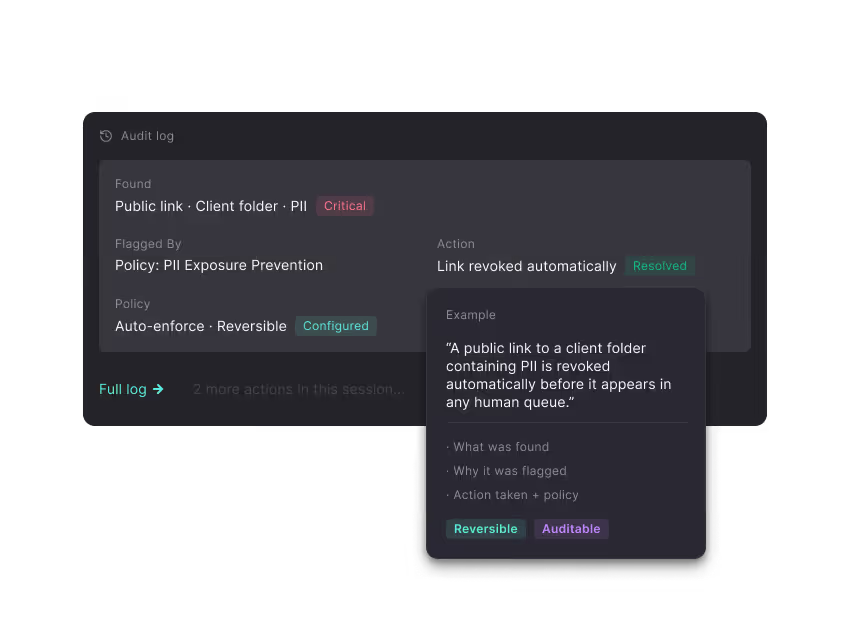
Teleskope generates continuous reporting on AI data access — what tools have access to what data, what sensitive data was found in AI-accessible repositories, what actions were taken, and what the current exposure posture looks like. This gives the CISO a board-ready story: not "we're blocking AI" and not "we hope it's fine," but "here's exactly what our AI tools can see, and here's how we're governing it."