









Proving where, and fixing it, is the hard part, and remediation still depends on someone working through a queue that never clears.
"By the end of the project, we could tell our board: we have a ton of PHI, we did this initiative, we gathered the info, and we reduced access significantly, here are the results."

DLP tools work at the egress point, trying to catch PHI as it leaves. Teleskope works at the source, classifying and governing PHI where it lives, before it moves. The two are complementary, Teleskope's classification can feed your DLP tool more accurate labels.
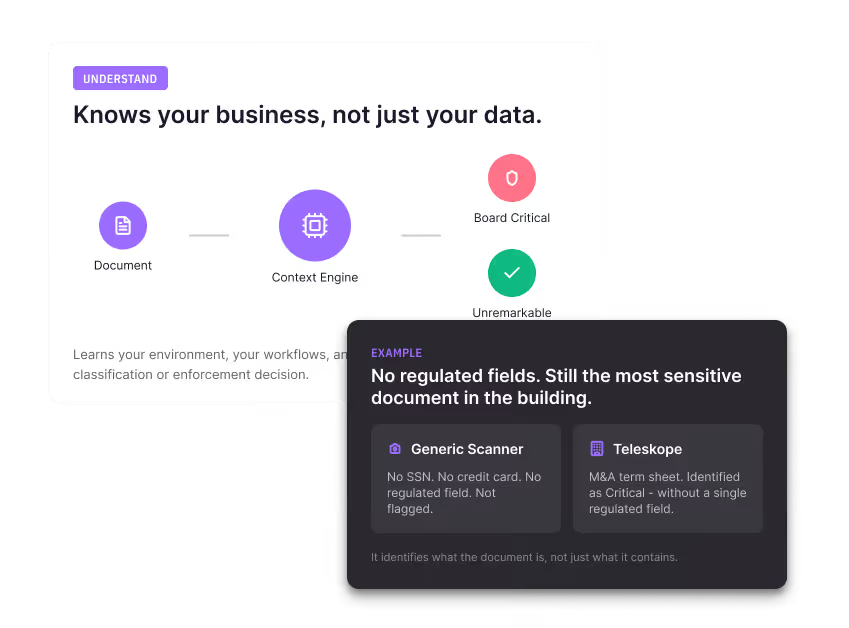
Yes. Teleskope's classification engine understands document type and context, not just structured fields, so it identifies PHI in scanned forms, free-text notes, and non-standard formats a regex-based tool would miss.
Yes. Teleskope supports fully air-gapped and self-hosted deployments for exactly this situation, which matters in healthcare more than most industries. Financial services, healthcare, government, and utilities were specifically named as the customers most affected when Varonis began forcing its on-prem base onto SaaS.
Varonis has announced end-of-life for its self-hosted, on-premises product, converting remaining non-SaaS customers to SaaS through 2027. If your compliance program depends on keeping PHI inside your own environment, that option is disappearing. Teleskope runs fully air-gapped today, with no sunset plan, and classifies on business context rather than the regex and dictionary matching that drives Varonis's false-positive rate.
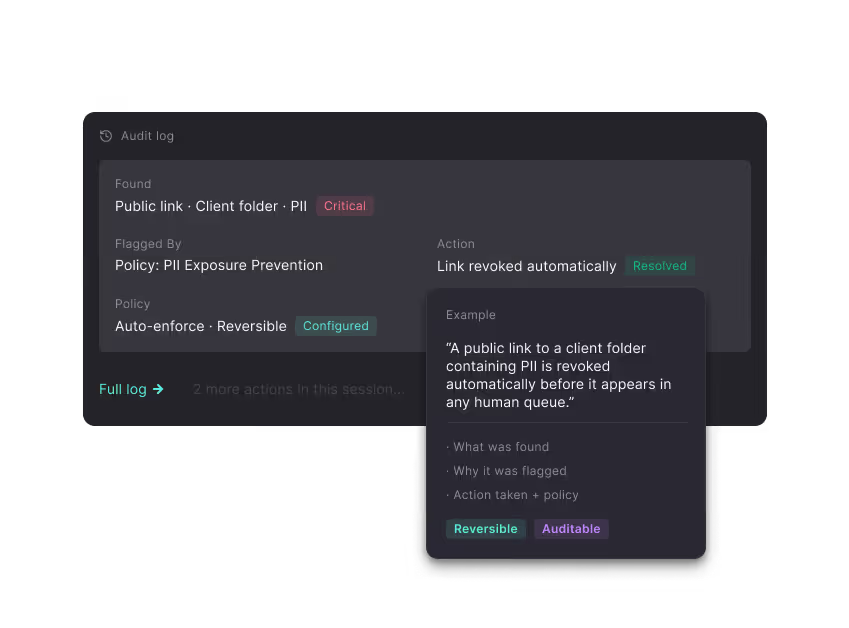
Every action is reversible and logged. If access is revoked or a file is quarantined incorrectly, it can be restored immediately, with an audit trail showing exactly what happened, why, and under which policy.