













Enforce Least-Privilege Access

Someone on your team has access to data they've never touched.

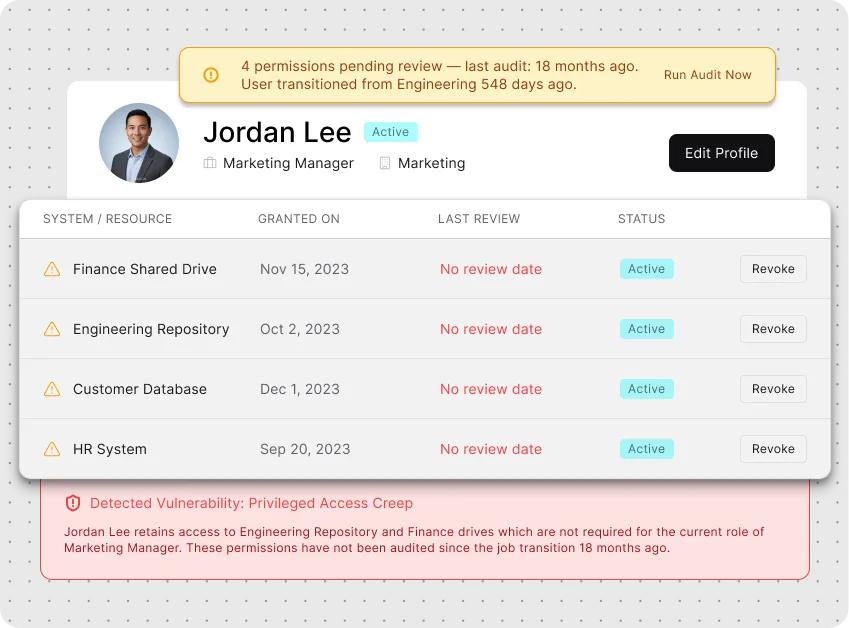
Automatically enforce least privileged access to sensitive data — based on evidence of actual usage, not assumptions about what people should need.
Teleskope dashboard flagging publicly shared files containing credit card numbers, SSNs, and passwords as critical risk
Customers who trust Teleskope for access governance:

Teleskope for Least-Privilege Access

Teleskope tracks who actually uses what data, identifies access that exceeds legitimate need, and removes it automatically, based on evidence, with a full audit trail and flexible human-in-the-loop controls.

Enforce least-privilege access

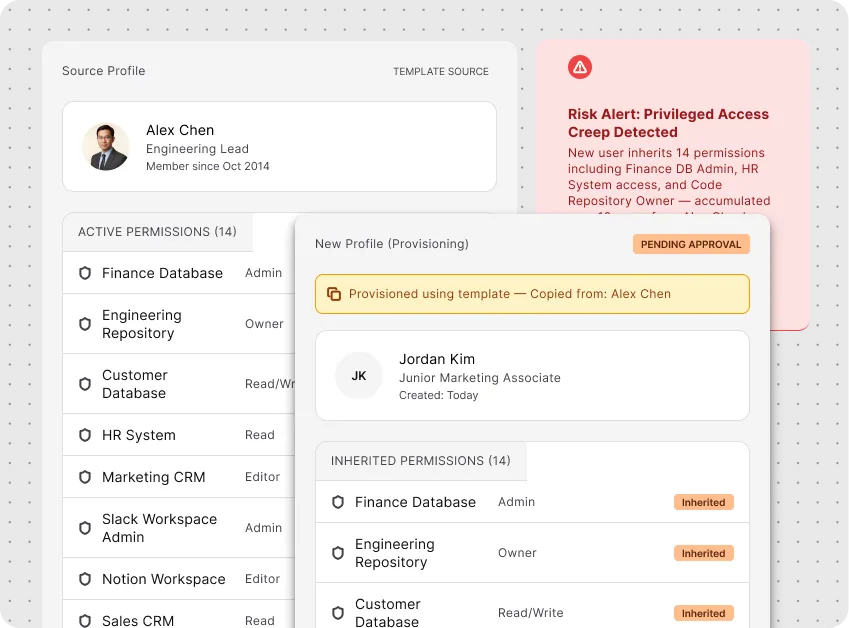
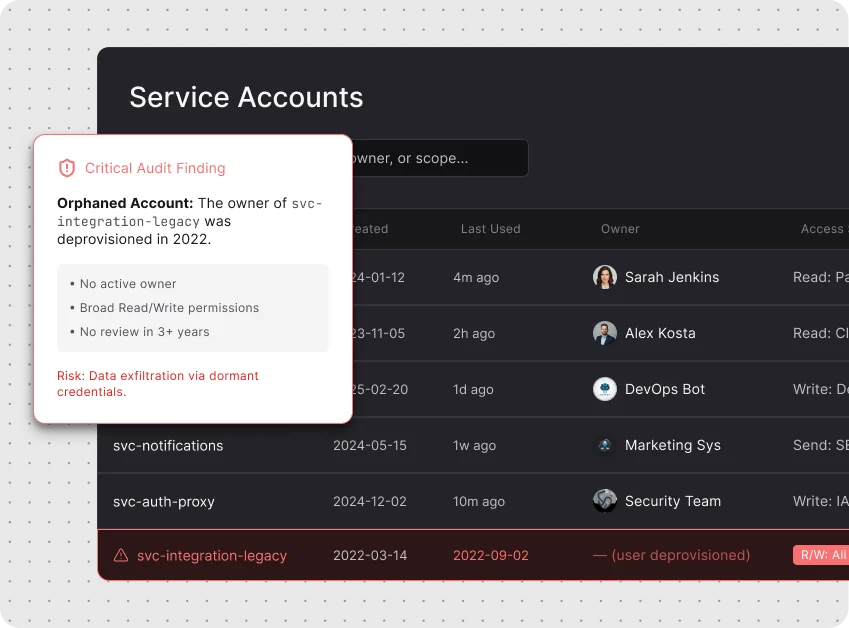
Enforce least-privilege access to sensitive data across users, service accounts, and AI agents

Detect overly permissive access

Detect and remediate overly permissive access, including public links and domain-wide sharing

Remove stale access

Automatically remove stale access based on your policy, not assumptions

Run entitlement reviews

Run entitlement reviews for regulated data without a manual audit process

From detection to auto-remediation in one platform

Understand data access

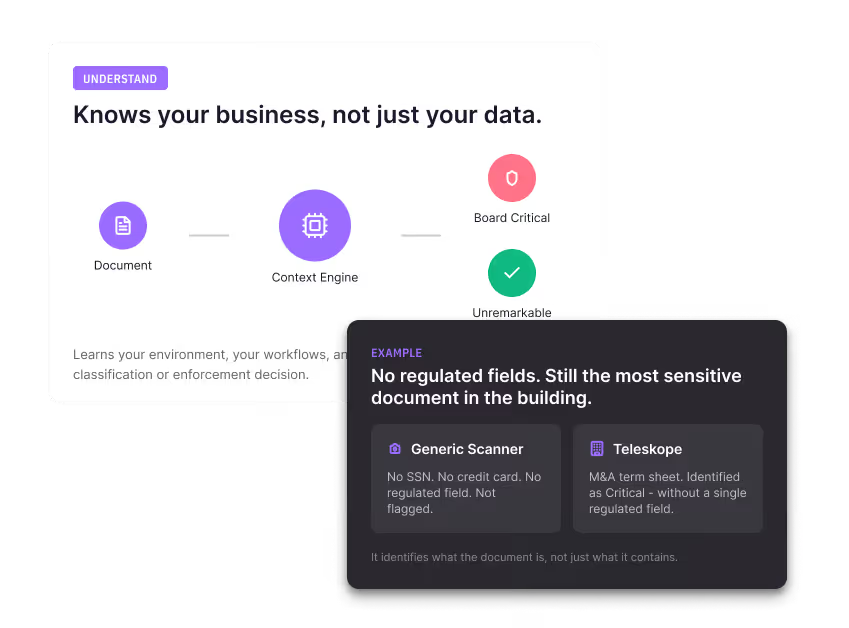
Teleskope tracks not just what access exists but what access is actually being used: cross-referencing user roles, data sensitivity, and real usage patterns to distinguish legitimate access from accumulated over-permission. It understands the difference between an employee who needs broad access for their current role and one whose permissions outlived the role that justified them.
Teleskope's context engine classifying a document as business-critical even with no regulated fields

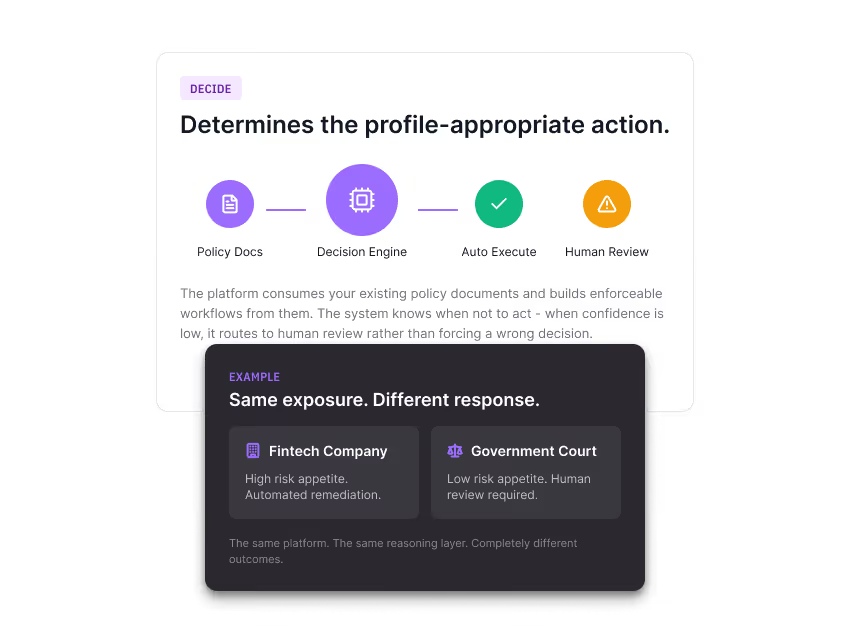
Decide which action to take

Access remediation decisions are made on evidence, not assumptions. A user who hasn't touched a sensitive dataset in 90 days is treated differently from one who accesses it daily. Service accounts are evaluated separately from human users. The decision is specific, defensible, and based on what's actually happening in your environment, not a generic policy threshold.
Teleskope's decision engine choosing automated remediation or human review based on risk profile

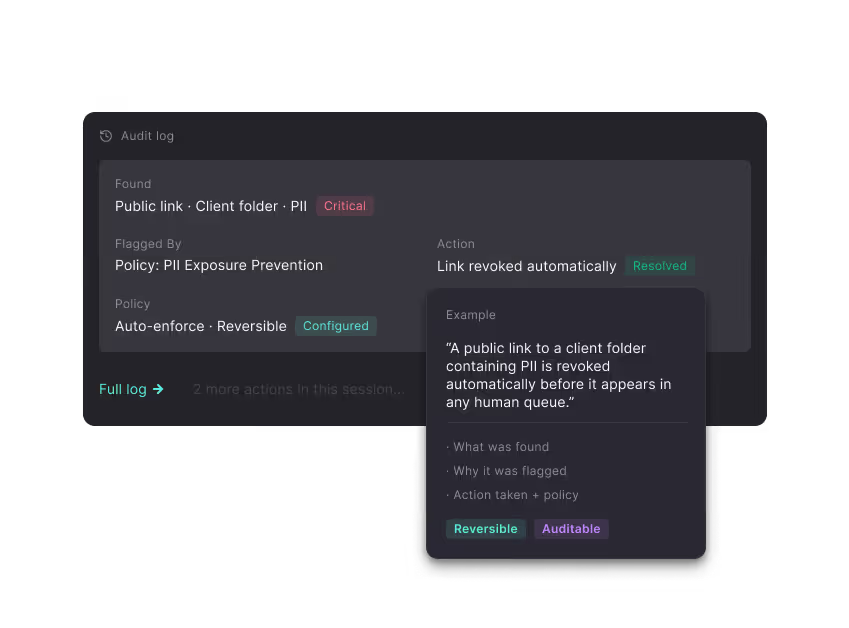
Enforce it automatically

Stale and overly permissive access is removed natively, without routing to a separate IAM tool, without filing a ticket, without waiting for an annual access review. Every removal is logged with the evidence that justified it, creating the audit trail your compliance program requires.
Teleskope audit log showing a public link to PII auto-revoked and resolved before human review

"A lot of DSPMs, they identify the risk but don't automate the action. It kind of just works without me having to necessarily micromanage it at all times — which is a huge benefit for us because we just don't have that operational capacity."

Alvin Zhang
Security Ops

Frequently Asked
Questions

Have more questions?
Contact us
Contact us

We already have an IAM tool. Why do we need Teleskope for access governance?

arrow down

IAM tools manage identity and provisioning — they control who gets access and how. Teleskope governs the data those identities can reach — classifying what's sensitive, tracking how it's actually used, and removing access that exceeds legitimate need. The two are complementary: IAM manages the identity layer, Teleskope manages the data layer. Together they close the gap that exists when access is granted to data that was never properly classified in the first place.

How does Teleskope know what access is legitimate versus excessive?

arrow down

Teleskope combines three signals: the sensitivity of the data being accessed, the user's current role and business context, and actual usage patterns over time. Access that looks appropriate on paper but hasn't been exercised in 90 days is treated differently from access that's used daily for a clear business purpose. The recommendations Teleskope makes are specific and defensible — not just a list of everything that technically exceeds a policy threshold.

What about service accounts and AI agents? Our IAM tool doesn't cover those well.

arrow down

This is one of the areas where Teleskope is most differentiated. Service accounts and AI agents operate at a different scale and with different behavioral patterns than human users — they're often overlooked in standard IAM reviews and can accumulate access that was never intended to persist. Teleskope tracks and governs non-human access with the same rigor it applies to human users, including agentic systems that introduce multi-layer access complexity.

Won't removing access create friction for employees who need to re-request it?

arrow down

The friction of re-requesting access is significantly lower than the risk of persistent over-permission — and most employees, when notified clearly, prefer to have their access rationalized. Teleskope supports a workflow where users are notified before access is removed, given a window to object or justify continued access, and provided with a simple re-request process. The 90-day stale access threshold can be configured to fit your organization's working patterns.

How does enforcing least-privileged access help with our next compliance audit?

arrow down

Teleskope generates continuous, audit-ready evidence of least-privilege enforcement — showing access granted, access used, access removed, and the policy basis for each action. For HIPAA, PCI, SOC 2, and similar frameworks, this replaces the manual evidence-gathering process that typically consumes weeks of security team time before each audit cycle.

What happens if an access removal was wrong?

arrow down

Every access removal is logged and reversible. If access was incorrectly removed, it can be reinstated immediately with full context of what happened and why. The audit trail satisfies EU AI Act and ISO 42001 requirements for human oversight of automated decisions.

Your backlog isn’t a resource problem. It’s a tooling problem.

See how Teleskope resolves high-confidence data exposure automatically 
— starting in your first session.
Book a Demo
Book a Demo